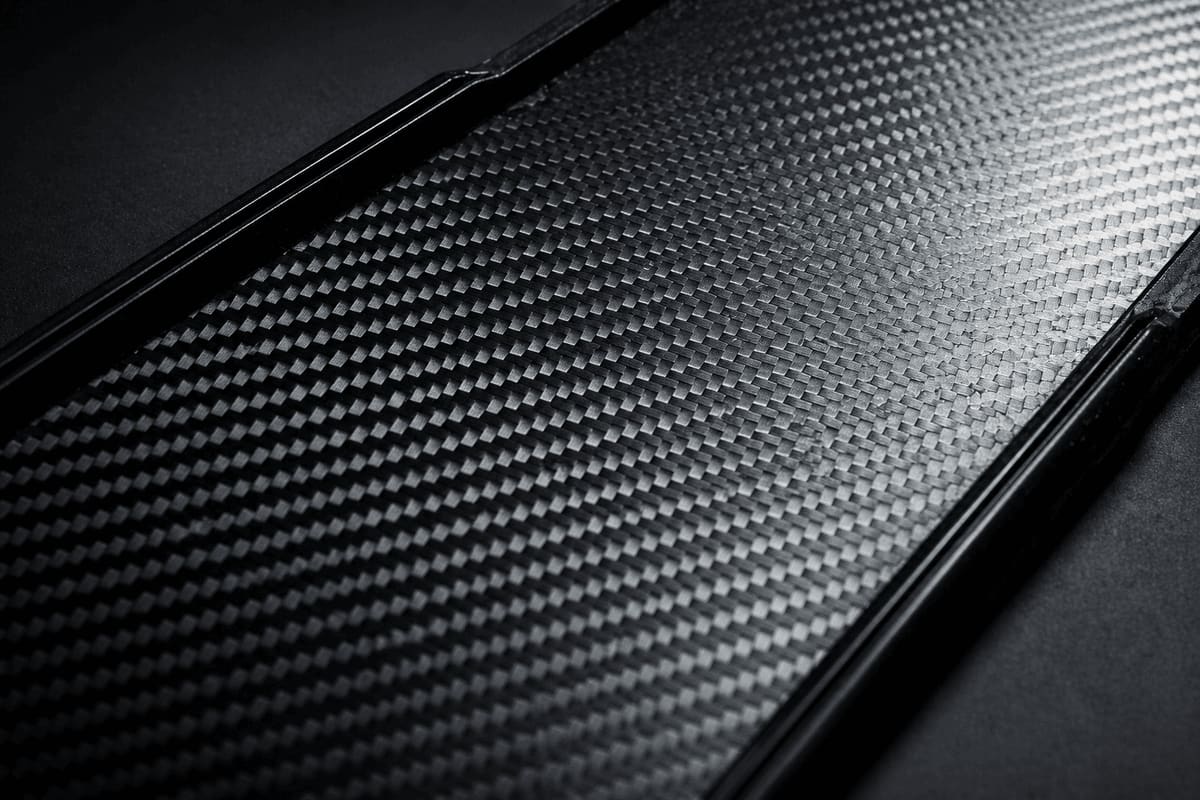

Why Carbon Fiber Works Better
A freediving fin blade does one thing: transfer the force of your leg kick into forward motion. The less energy lost in that transfer (to blade flex, drag, and vibration) the more of each kick actually moves you. Carbon fiber is at the top of that performance hierarchy.
When your leg pushes a fin blade through a kick cycle, the blade flexes under load and snaps back, releasing stored energy as thrust. Think of it like a bow.
- Higher stiffness
- more energy stored and released per kick
- Lower weight
- less energy spent just moving the blade through water
The result: more thrust per kick with less leg fatigue over a long session.
Carbon vs Fiberglass vs Plastic
- Plastic → fiberglass
- the larger step, worth it once a soft blade is the limit on your sessions
- Fiberglass → carbon
- Molchanovs says the difference between its fiberglass and carbon blades is very small for most freedivers, and that only athletes trying to set records really need carbon
Blade Stiffness Guide
When in doubt: choose medium. It covers the widest range of conditions and forgives technique variations.
The Blade-and-Pocket Setup
Most carbon setups are blades only, foot pockets chosen separately. This lets you optimize both independently.
- Blade examples
- Molchanovs SPORT and PRO carbon blades, Leaderfins carbon blades, Cressi Gara Modular carbon blade
- Pocket examples
- Molchanovs SPORT silicone pockets (Standard or Wide), Cressi Gara Modular and Gara Turbo pockets; fit varies by foot width
Some brands sell complete carbon fins: Molchanovs (SPORT Bifins 3 Carbon $505, PRO Bifins 3 Carbon $800) and Leaderfins (100% Carbon Bi-Fins from €165). That is a good option if you want to skip the selection complexity. If you already own a Cressi Gara Modular pocket, Cressi's carbon blade ($289.95 per blade) is the upgrade route.
Price Expectations
- Leaderfins 100% Carbon Bi-Fins
- from €165 complete (Leaderfins store, October 2026)
- Cressi Gara Modular carbon blade
- $289.95 per blade, $579.90 for a pair (Cressi America)
- Molchanovs SPORT Bifins 3 Carbon
- $385 blades only, $505 complete (Molchanovs US)
- Molchanovs PRO Bifins 3 Carbon
- $800 complete (Molchanovs US)
Care, The Non-Negotiables
- 01 —Never sit or step on carbon blades
- 02 —Use a blade bag for transport, loose in a gear bag gets pressed by weights
- 03 —Rinse with fresh water after salt diving
- 04 —Avoid prolonged direct sun and heat
- 05 —Walk fins-first to the water, tips dragging on rocks chips edges
When to Upgrade
Upgrade when you've hit the actual ceiling of your current blades, not when you want equipment to compensate for technique.
Concrete signals
- Consistently reaching 15-20m and pushing deeper
- Kick technique is stable, same angle and timing every stroke
- You can feel the fiberglass blade limiting your efficiency
Still working on equalization, duck dives, and your first 10m dives? Spend the money on a course first.