- + Pocket takes Cressi's other long blades
- + LD blade, which Cressi describes as soft
- + Self-adjusting instep band for a high instep or thicker socks
- + US list price $129.95
- − No published blade length or weight
- − Cressi's carbon upgrade blade is $289.95 per blade

Overview
Fins decide how much of each kick turns into movement. A well-matched blade extends your glide and reduces kick effort; a poor choice, usually the wrong stiffness for your strength and technique, wastes energy.
This guide covers polymer, fiberglass and carbon fins. The picks are matched to skill level, because the right fin depends more on your kick than on the price.
What to Look for in Freediving Fins
Blade Material
Blade material is the first decision. Polymer blades (polypropylene and technopolymer) are soft, forgiving and the cheapest, which makes them the usual first pair. Fiberglass is stiffer and lighter, and Molchanovs says it is more durable than carbon. Carbon fiber is lighter again, though Molchanovs says the difference between its fiberglass and carbon blades is very small for most freedivers. When technique is still developing, a stiff blade works against you.
Foot Pocket Fit
A poorly fitting foot pocket causes blisters, hot spots and wasted kicks. Try pockets with the socks you plan to dive in, because makers size them differently: SEAC sizes the Motus for 2-3 mm socks at your shoe size, Mares designs the Razor Pro pocket for a 3 mm sock, Cressi says the Gara Modular pocket is wider than its other Gara pockets, and Molchanovs sells its SPORT pockets in Standard and Wide. If you need a size outside the usual range, the Rob Allen Scorpia runs from EU 35/36 to 49/50.
Blade Stiffness
Blade stiffness is usually rated from soft to hard, on a scale that differs by brand. The right stiffness depends on your leg strength and kick technique. A blade that is too soft gives no resistance to push against; one that is too stiff fatigues your legs quickly and shortens your effective kick. Most beginners should start soft or medium.
Blade Length
Brands measure length differently: Mares gives the Razor Pro blade as 63 cm, while Molchanovs measures its SPORT blades from the angle to the tip at 62-64 cm. Longer blades generate more thrust per kick but require a slower, more deliberate movement. Shorter blades suit a faster kick rhythm.
How These Picks Were Chosen
- Specs and intended use as published by the manufacturer
- US list price where the maker publishes one
- Fit for the experience level the maker states
- Upgrade path: whether the pocket takes other blades
- Availability in the US market
A Note on Fit vs Performance
The most efficient fin on a diver with poor kick technique is still slower than a beginner fin on a diver who has spent 50 hours in the water. Fins amplify what you already do. They do not substitute for it. Budget and buy for your current level, upgrade once your technique stops improving, and if this is your first pair, start with the best freediving fins for beginners.
Top Picks
- Just starting
- Cressi Gara Modular: a soft LD polypropylene blade on a pocket that takes Cressi's other long blades, $129.95.
- Swappable polymer alternative
- SEAC Motus: interchangeable technopolymer blade at 22 degrees, black or camouflage.
- Fiberglass
- Molchanovs SPORT Bifins 3 Fiberglass ($400) or Leaderfins fiberglass bifins (from €120 on its store); see the fiberglass guide.
- Carbon
- Molchanovs SPORT Bifins 3 Carbon ($505), or Cressi's Gara Modular carbon blade ($289.95 per blade) if you already own a Gara Modular pocket.
What to Avoid
- Scuba fins: short blades built for horizontal swimming and manoeuvring, not long descents.
- Fins with no published specs: without blade material, angle or sizing advice from the maker, you cannot compare them.
- Buying the most expensive carbon fins as your first pair: you will not be able to use what they offer.
Best Overall: Beginner, With an Upgrade Path
Cressi Gara Modular Fin
Cressi
$129.95
- Material
- High-modulus polypropylene blade
- Foot pocket
- Full foot
- Stiffness
- LD (Cressi: soft)
- Best for
- Beginner
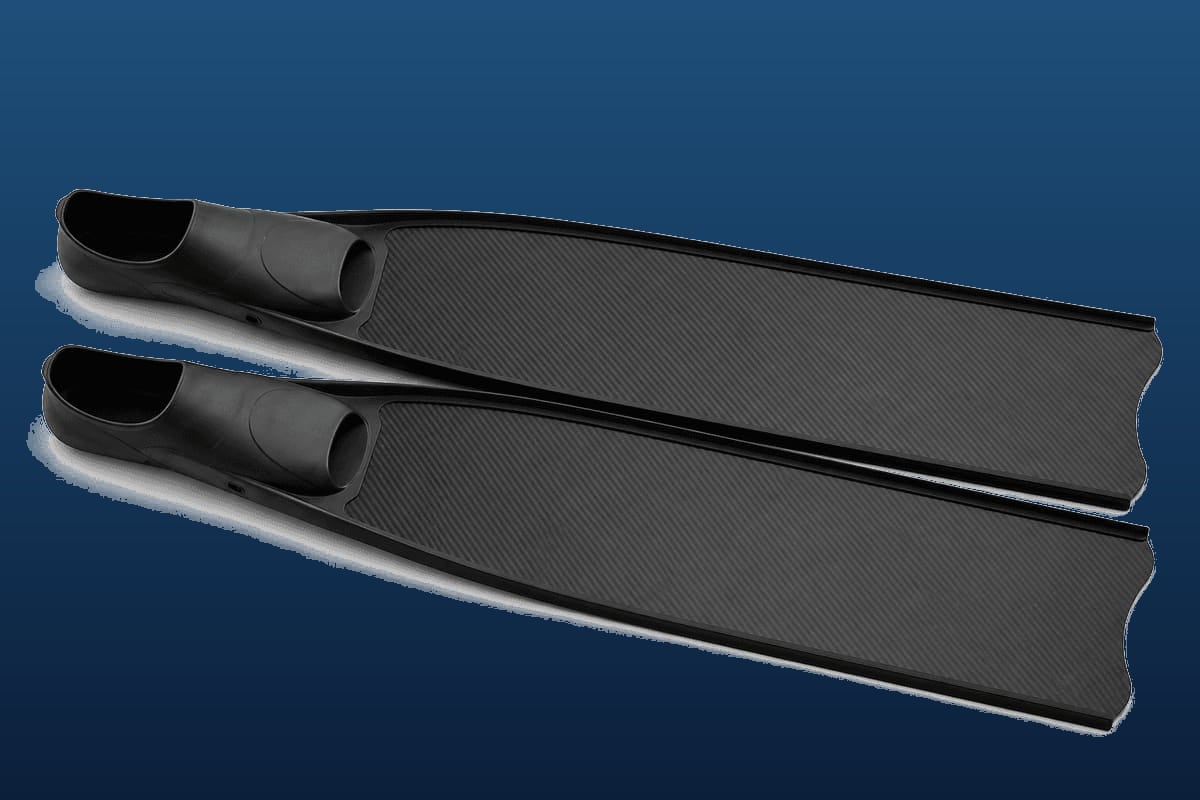
A full-foot long fin with a soft LD polypropylene blade on a Gara Modular pocket. Cressi says any of its polypropylene, fiberglass or carbon long blades fit that pocket, so the fin you learn on can take a stiffer blade later. US list price $129.95 (Cressi America, October 2026).
- Pocket takes Cressi's other long blades
- LD blade, which Cressi describes as soft
- Self-adjusting instep band for a high instep or thicker socks
- US list price $129.95
- No published blade length or weight
- Cressi's carbon upgrade blade is $289.95 per blade
Affiliate link - no extra cost to you
Swappable Polymer Blade
SEAC Motus Freediving Fins
SEAC
See current price
- Material
- Technopolymer blade
- Foot pocket
- Full foot, dual density
- Blade angle
- 22 degrees
- Best for
- Beginner to intermediate
A full-foot long fin with an interchangeable technopolymer blade, not fiberglass as earlier versions of this page said. SEAC sets the blade at 22 degrees, uses a dual-density rubber pocket and sizes it for 2-3 mm socks at your everyday shoe size. Blades come in black and five camouflage colours. SEAC publishes no US list price.
- Interchangeable blade
- Clear sizing rule from SEAC
- Black and five camouflage blade colours
- Polymer, not fiberglass: no material step up from the Gara Modular
- No US list price or stiffness rating from SEAC
Affiliate link - no extra cost to you
Best Carbon: Experienced Divers
Molchanovs SPORT Bifins 3 Carbon
Molchanovs
$505.00
- Material
- 100% carbon fiber blades
- Foot pocket
- Silicone, open-heel design, removable
- Blade length
- 62 cm Soft, 64 cm Medium (angle to tip)
- Best for
- Experienced divers
Earlier versions of this page listed a 'Molchanovs Flow', which Molchanovs does not make. Its all-round carbon bifin is the SPORT Bifins 3 Carbon: 100% carbon blades in Soft (62 cm) or Medium (64 cm), removable silicone pockets at 28 degrees in Standard or Wide, and 1.6-1.9 kg per pair. US list price $505 (Molchanovs, October 2026), against $400 for the fiberglass version.
- 100% carbon fiber blades
- Removable pockets in Standard or Wide
- Lighter than the fiberglass version (1.6-1.9 kg vs 1.7-2 kg per pair)
- $105 more than the fiberglass version
- Soft and Medium only
- Molchanovs says fiberglass is more durable
Affiliate link - no extra cost to you
What this article is based on
- Cressi Gara Modular Fins | Freediving & Spearfishing Long Blades
- Gara Modular Carbon Blade (Single Blade)
- PINNE MOTUS, Seac Sub Spa
- SPORT Bifins 3 Carbon
- SPORT Bifins 3 Fiberglass
- Your Complete Guide to Molchanovs Bifins
- Razor Pro | Mares
- Fiberglass Bi-Fins : Leaderfins
- MUNDIAL ONE (2024)
- Scorpia Evo Fins, ROB ALLEN (archived copy)